Ambulation after surgery means getting up and walking after the clinical team clears the patient to move. It may matter because long periods of inactivity can affect circulation and make ordinary movement harder to regain. The safe timing, distance, assistance, and equipment depend on the operation, the patient's condition, and the written plan. At home, families should support that plan instead of creating a new walking program or changing its limits.
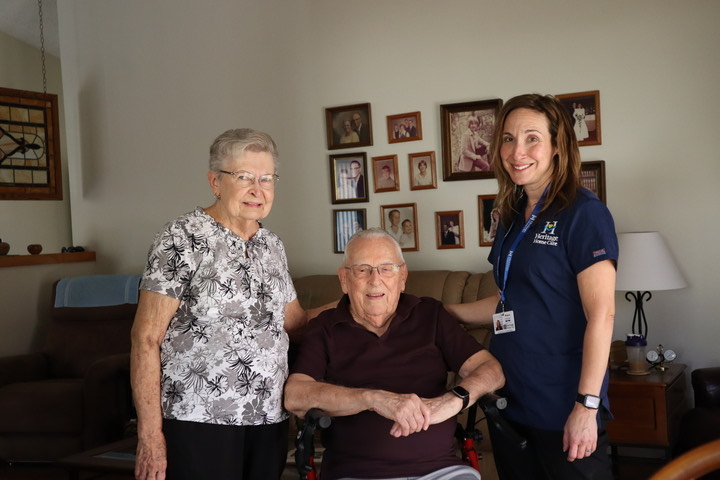
Ambulation means walking within the clinical plan
In this setting, ambulation means walking after the clinical team has cleared the patient to move. Assistance or equipment may be part of the plan. Ambulation is not the same as starting a general exercise program.
A patient may be cleared to walk to the bathroom while stairs still remain off limits. Another patient may be allowed to walk farther but must avoid placing full weight on one leg. Restrictions change with the operation and the person's condition.
MedlinePlus guidance on getting out of bed after surgery tells patients to move only when the nurse says it is appropriate. It also notes that a surgeon or physical therapist may teach the safest method. After discharge, the family should follow those patient-specific instructions instead of a general timetable found online.
Why walking may be included in a recovery plan
Postoperative movement is often described as a shortcut to faster recovery, but the evidence is more measured because it does not promise the same result for every operation.
Movement supports blood flow when inactivity is a concern
Surgery can raise the risk of venous thromboembolism. Limited movement may add to that risk by slowing blood flow. The Centers for Disease Control and Prevention therefore advises people to move as soon as possible after being confined to bed. Throughout recovery, the patient's own medical guidance still applies.
Walking may be one part of a blood-clot prevention plan. Some patients will have other measures in place. Walking does not replace prescribed medication or a compression device ordered by the clinical team.
Mobility can help protect everyday function
Older adults can lose strength during illness and hospitalization. Spending much of the day in bed can make ordinary movement harder once the person returns home. An American Geriatrics Society white paper describes mobility loss as common among hospitalized older adults and connects it with greater difficulty managing daily activities.
The paper does not prove that one walking schedule will prevent those problems for every patient, but it does explain why clinicians aim to preserve safe movement within the limits of the operation.
Some benefits depend on the type of surgery
Although early movement appears in many enhanced recovery programs, studies do not support every claim made about it.
A 2023 systematic review of gastrointestinal surgery found that digestive function returned somewhat earlier in patients assigned to early mobilization. The randomized trials did not show a significant improvement in overall complications or hospital stay. The studies also used different operations and mobility plans.
A 2026 review of emergency abdominal surgery reported possible benefits but rated the certainty of the evidence as very low. That uncertainty matters because walking alone should not be presented as a reliable way to prevent pneumonia. It cannot promise less pain or prevent readmission, and it cannot guarantee a faster recovery.
Plan before care becomes urgent.
Heritage owner Nate West encourages families to begin the home-care conversation before a sudden change forces a rushed decision. In this 30-second Your Life Arizona segment, he explains why planning early can give a family more room to understand the next step.
The right time to walk is different for each patient
There is no universal number of hours after surgery when every patient should start walking, because the timing depends on the type of surgery. A patient's response to anesthesia may alter the plan, as may pain or unstable blood pressure.
Clinicians may set a weight-bearing restriction, while tubes or drains can add another limitation for someone who already had trouble walking before surgery. Complications can change that timing again.
Procedure-specific instructions can differ sharply. For example, MedlinePlus knee-replacement discharge guidance tells patients to use a walker or crutches as directed. The surgeon or physical therapist decides when weight bearing is safe for that specific patient. Those instructions apply only to that patient's recovery unless a clinical professional says otherwise.
Before discharge, the family should know who cleared the patient to walk and how much help is permitted under the current restrictions. The plan should also name the person to call when a question comes up.
What families should expect during the first 24 hours at home
The first day is about following the written plan, not proving that the patient is back to normal. Keep the discharge instructions and clinical contact information where the patient, family, and caregivers can find them. Confirm the approved walking limits, any weight-bearing restriction, the equipment to use, and the signs that mean a walk should stop.
Make the usual route between the bed, bathroom, and kitchen easier to use. Clear clutter, improve lighting, keep prescribed equipment within reach, and plan meals and rest around the instructions. A non-medical caregiver can help with approved mobility support, transportation, meals, household routines, and medication reminders. The caregiver should not change a prescription, administer medication, choose equipment, or improvise a transfer.
If the patient cannot follow the method taught by the clinical team, or develops a warning sign named in the discharge plan, pause and contact the appropriate licensed professional. Breathing trouble or chest pain requires immediate medical help.
Where Heritage begins before discharge
In Heritage's work with Scottsdale and Maricopa County families, the return home can become more stressful when support is discussed only after the patient has arrived. Heritage encourages families to call as soon as a discharge date is being discussed. That leaves time to understand what the first days at home may require.
The assessment stays practical. Heritage learns how life normally works in the home and where the family expects the most pressure. The medical team remains responsible for the recovery instructions.
How families can support the mobility plan at home
The licensed team sets the limits.
The patient moves only as directed.
Daily support protects time for recovery.
The first days at home are often tiring, so families can focus on supporting the licensed plan rather than trying to design rehabilitation. Heritage’s first-week home care guide after surgery offers a practical way to organize that transition.
What Heritage covers during the free assessment
A Heritage team member starts by asking what changed and how the home normally works. For someone returning after surgery, the assessment connects that everyday routine to the written discharge plan without changing the medical instructions.
This helps the family decide whether support is needed only for the first stretch at home or for a longer period. Heritage can then shape the caregiver schedule around the times when help will matter most.
Keep one clear copy of the plan
Keep the current discharge instructions where everyone involved can find them, and make sure the latest version identifies the right clinical contact.
Ask what a safe walk looks like
Before discharge, ask the clinical team to describe the next approved step. Find out whether the patient may place full weight on the affected area and confirm who is allowed to help. The family should also understand what would bring the walk to an early stop.
Make the usual route easier to use
Look at the path between the bed and bathroom, and move loose clutter out of the way. Floors should stay dry and the lighting should make obstacles easy to see.
Keep any prescribed equipment within reach. The patient should use it exactly as the clinician and manufacturer direct. A change in technique belongs with the clinical team because an online article cannot account for the patient's condition.
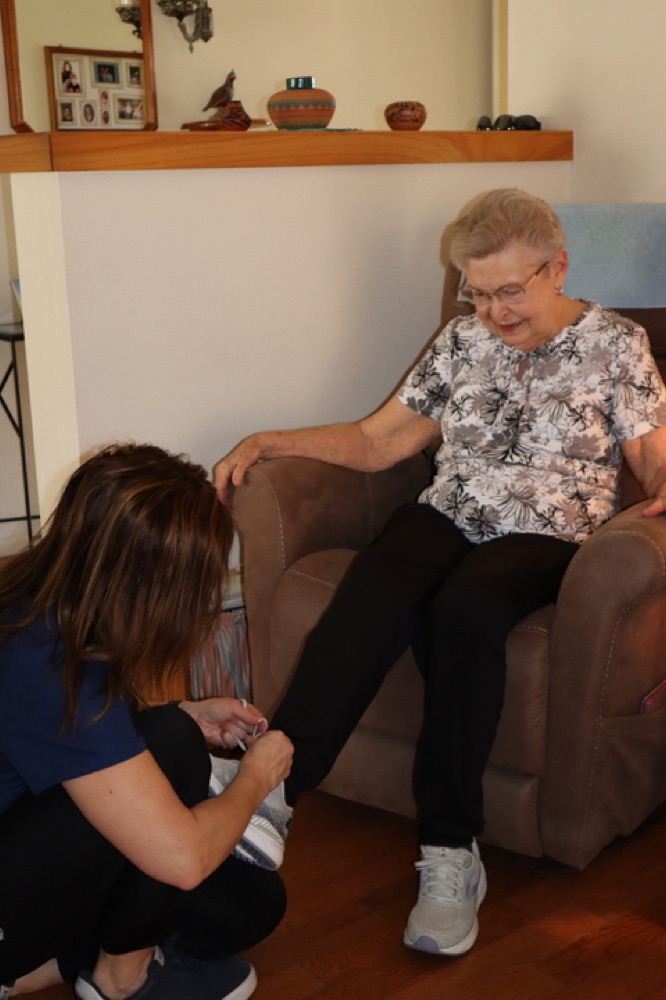
A caregiver can support the ordinary parts of the day while the family follows the clinical plan.
Fit the rest of the day around recovery
Meals and rest can be planned around the mobility instructions. Medication reminders can keep the day organized without changing the prescription. Transportation can also be arranged before follow-up visits become another source of pressure.
A short written note can help the family remember what happened during a walk and give the clinical team a clearer account if a question comes up. Keep it factual and share it only as authorized.
Do not improvise physical assistance
Do not improvise a lift or transfer. If the method taught by the clinical team is no longer working, pause and contact the appropriate licensed professional.
Where non-medical home care fits after surgery
Non-medical home care can support the ordinary parts of the transition home because practical help with a meal or light housekeeping can leave more room for the patient to rest and follow the discharge plan.
A caregiver can provide transportation for a follow-up appointment. Reminders may be part of the daily routine, but medication administration stays with the patient or clinical professional. Any mobility support follows the clinical plan. Heritage shares family updates only when the client has authorized that communication in advance.
Decisions about when ambulation begins stay with the licensed clinical team. Heritage caregivers do not prescribe exercise or select equipment. Medication administration remains outside their role, as does the work of a nurse or physical therapist.
The Heritage page about post-hospital care in Scottsdale explains how short-term support can make the first days home more manageable.
Know when to pause and contact the clinical team
Pain during a walk is a reason to stop rather than push through. New weakness deserves the same response. If the person becomes dizzy, use the discharge plan to contact the named clinical professional. MedlinePlus gives similar guidance when pain or weakness makes it difficult for the patient to get out of bed at home.
The CDC advises prompt medical attention for new swelling in an arm or leg. The same applies if the area becomes painful or unusually warm. Redness or a change in color can also be a warning sign of deep vein thrombosis.
Difficulty breathing or chest pain can be signs of a pulmonary embolism and require immediate medical help. So does coughing up blood. A fainting episode or sudden lightheadedness also needs immediate attention.
For a wound concern, use the thresholds in the patient's discharge paperwork and follow the same document for fever or another post-surgical change. Only the clinical team can determine whether a complication is present.
Ambulation after surgery, explained simply.
Clear answers about walking after surgery and where non-medical support fits once someone returns home.
01What does ambulation mean after surgery?
Ambulation means getting up and walking as part of the postoperative plan, sometimes for only a very short distance. A licensed professional decides when walking can begin and whether help is needed.
02Why is ambulation important after surgery?
Walking may support circulation after a period of limited movement while helping the patient maintain everyday function. Its role still depends on the operation and the clinical plan.
03What are the possible benefits of early ambulation?
Some research supports better blood flow and maintenance of mobility as reasons to move. Gastrointestinal surgery studies have also reported an earlier return of bowel function, while results for broader complications and hospital stays remain mixed.
04How soon should someone walk after surgery?
There is no universal timetable. Follow the written discharge plan and ask the clinician responsible for the patient's recovery when movement can begin.
05What if someone needs help walking after surgery?
The clinical team should explain what kind of assistance is appropriate and whether a device is needed. Family members should not improvise a transfer or lifting method.
06Can non-medical home care help after surgery?
Yes. A non-medical caregiver can take pressure off the daily routine while the family follows the clinical plan. Physical therapy and changes to clinical instructions remain with licensed professionals.
Make the plan clear before the patient comes home
The importance of ambulation after surgery is not that every patient must meet the same walking goal. Safe movement may be an important part of recovery, but the plan must fit the patient. The instructions also need to remain understandable after discharge.
If your family is preparing for an older adult to return home in Scottsdale or elsewhere in Maricopa County, Heritage can help with the non-medical parts of the transition. You can Call (480) 418-4100 to discuss the home routine. The conversation can also cover the support already ordered by the clinical team and the daily help that may make home more manageable.
Plan the return home.
Call Heritage to discuss post-hospital support.
Sources
Practical movement guidance comes from MedlinePlus, whose knee-replacement discharge page illustrates why weight-bearing instructions must remain procedure-specific.
The blood-clot section follows current CDC guidance, while the discussion of function in older adults draws from the American Geriatrics Society.
Evidence limits were checked against systematic reviews of gastrointestinal surgery and emergency abdominal surgery; family preparation also reflects the AHRQ hospital-discharge guide.