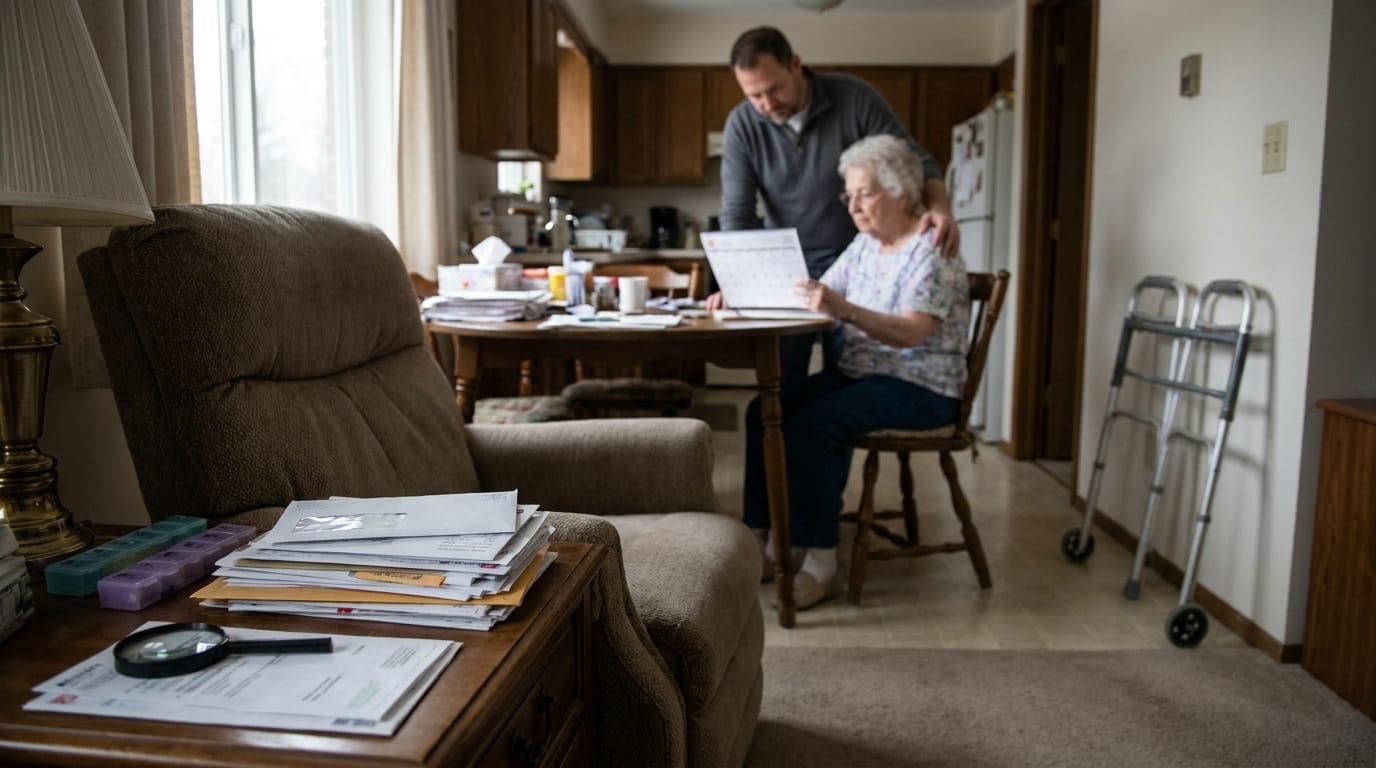

To support safe senior mobility at home, start with one everyday task the person wants to keep doing, such as reaching the kitchen or getting ready for bed. Clarify the health care team's movement instructions, agree on any help needed and make that routine workable. If walking or standing has changed, ask the clinician to assess the change before the family improvises a new plan.
Choose a daily task that matters to your parent
Ask, "What would you like to be easier at home?" A useful answer might be joining breakfast at the table or reaching a favorite reading chair. Write down the starting point, destination and time of day. That gives the family and care team something more specific to discuss than "needs help walking."
Separate the person's preference from the question of what is safe today. A wish to walk independently is a starting point for the conversation, rather than a reason to remove agreed assistance. Ask what feels difficult: getting up, turning, reaching the destination or managing something carried along the way.
One routine, three decisions
Example to discuss: getting from a favorite chair to the breakfast table.
Movement instructions
Which aid, limits and physical help apply?
Clarify with the clinician or therapist.
Everyday support
Who will be available, and what will they do?
Agree with the person, family and care provider.
Changes to report
What feels different, and who should be contacted?
Keep the care team's contact instructions with the plan.
Planning example based on Health in Aging's Caregiver Guide: Mobility Problems and MedlinePlus: Preventing Falls. Sources checked October 24, 2026.
Ask the care team to explain the help needed
Difficulty getting out of a chair, unsteadiness and falls are reasons to discuss mobility with the health care provider. The American Geriatrics Society's caregiver guide explains that a provider can arrange for a therapist or visiting nurse to teach assistance when a family cannot help someone move around.
Bring practical questions: Does someone need to be present? Is physical assistance required? What should a helper do if the usual task becomes harder? Ask the professional to demonstrate any assistance and watch the helper practice it. If the helper is unsure or cannot manage the agreed task, say so before relying on that arrangement.
After surgery, use the discharge team's specific movement instructions. Our guide to walking after surgery covers that separate recovery situation.
Get advice about a cane or walker
A device that worked for a friend may not fit your parent's needs. MedlinePlus recommends asking the provider about a cane or walker. Health in Aging adds that a physical therapist can adjust the device's height and teach its use.
Describe the actual route, including doorways and places to turn. Ask how the person should manage everyday objects along that route. Keep the current instructions available to everyone helping, rather than having each visitor suggest a different technique.
Make the agreed routine easier to follow
MedlinePlus recommends clear walkways, good lighting and frequently used items within reach. Check the path your parent actually uses, including the bedroom-to-bathroom route after dark. For a fuller room-by-room review, use our home safety guide.
Then decide who handles the surrounding tasks. One relative might prepare breakfast while another is available for the agreed mobility support. Ask which help your parent welcomes and which parts they want to do themselves. Keep the plan specific enough that a different helper can understand it.
Keep a short handoff and report changes
A simple household note can record the task and time, current instructions, agreed help, named helper and contact person. Add observations in plain language, such as "said the hallway walk felt harder this morning." Record what happened without guessing at its cause.
MedlinePlus advises contacting the provider after a fall or near-fall. CDC also recommends a fall-risk evaluation and a doctor or pharmacist's review of medicines that may cause dizziness or sleepiness. Bring concerns about walking, balance or medicines to the appropriate professional; ask them how the routine should change.
Find support for confidence and daily care
If concern about falling is limiting activities, Scottsdale's A Matter of Balance program offers practical strategies, activity goals and strength-and-balance exercises. The city lists classes at Granite Reef and Via Linda Senior Centers and requires registration. Check upcoming dates and ask about suitability and access before planning a visit.
For daily help at home, Heritage's personal care service includes support with personal routines and safer movement. Discuss the actual task, schedule and clinical instructions during an in-home assessment. Confirm what assistance can be provided before depending on a visit. You can also call (480) 418-4100 to talk through the routine.
Family questions
Questions about mobility support
Should we buy a walker when walking gets harder?
Ask the health care provider which aid is appropriate. A physical therapist can check the fit and teach its use. Bring questions about doorways, turning and the usual route through the home.
What if my parent is afraid to walk?
Listen to what feels difficult and discuss the concern with their health care provider. Ask what activity and assistance are suitable. In Scottsdale, check the city's A Matter of Balance page for registration and upcoming sessions.
How can relatives share responsibility for mobility support?
Keep the current instructions together and agree who covers each daily task. Record the task, time, agreed help, contact person and changes to report. Ask for instruction before providing unfamiliar physical assistance.
Does non-medical home care replace physical therapy?
Physical therapy evaluates and teaches movement within a clinical plan. Non-medical home care can support agreed daily routines. Discuss the help needed, the person's instructions and the caregiver's responsibilities before arranging care.
Sources and further reading
Sources checked October 24, 2026.
- Health in Aging: Caregiver Guide, Mobility Problems, professional instruction and walking aids.
- MedlinePlus: Preventing Falls, home setup and when to contact a provider.
- CDC: Preventing Falls and Hip Fractures, fall-risk and medicine review.
- City of Scottsdale: A Matter of Balance, local program and registration.
Frequently asked questions
Should we buy a walker when walking gets harder?
Ask the health care provider which aid is appropriate. A physical therapist can check the fit and teach its use. Bring questions about doorways, turning and the usual route through the home.
What if my parent is afraid to walk?
Listen to what feels difficult and discuss the concern with their health care provider. Ask what activity and assistance are suitable. In Scottsdale, check the city's A Matter of Balance page for registration and upcoming sessions.
How can relatives share responsibility for mobility support?
Keep the current instructions together and agree who covers each daily task. Record the task, time, agreed help, contact person and changes to report. Ask for instruction before providing unfamiliar physical assistance.
Does non-medical home care replace physical therapy?
Physical therapy evaluates and teaches movement within a clinical plan. Non-medical home care can support agreed daily routines. Discuss the help needed, the person's instructions and the caregiver's responsibilities before arranging care.