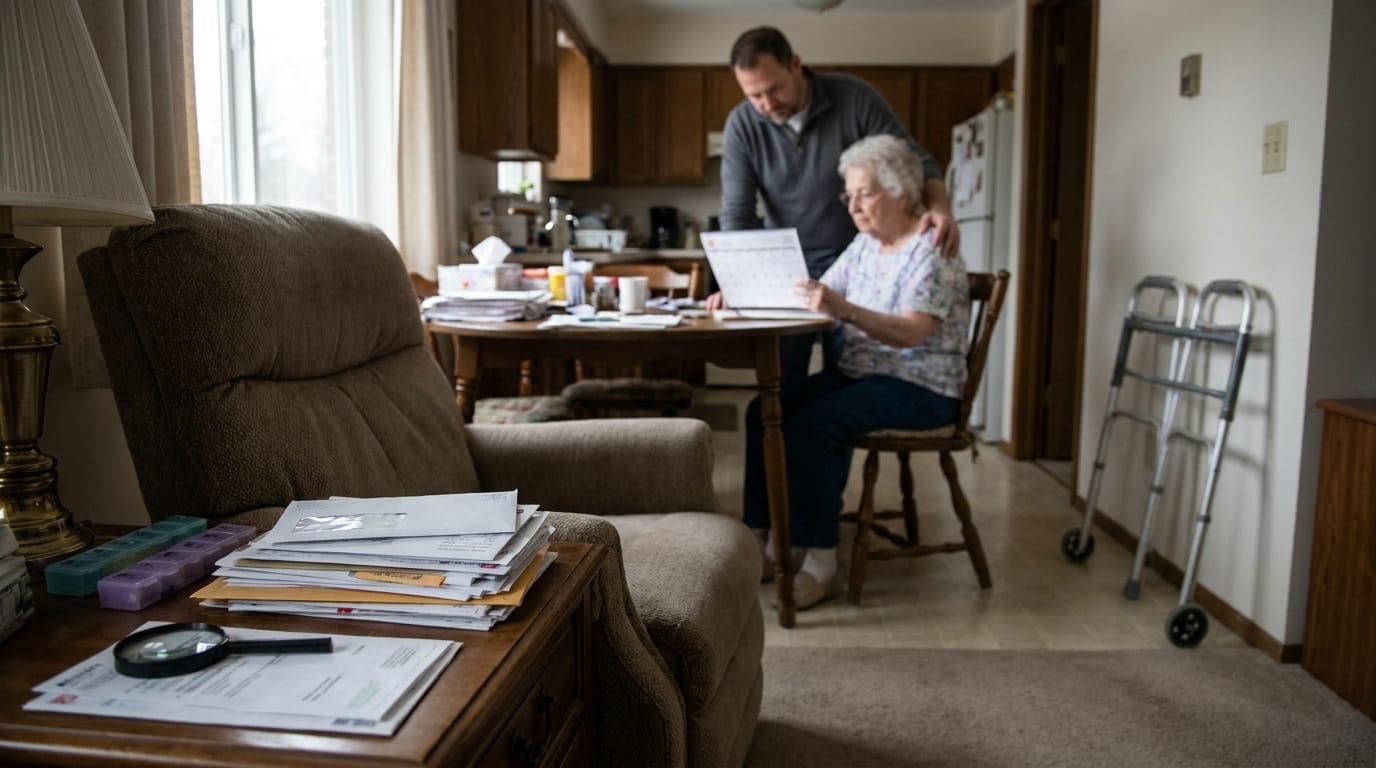
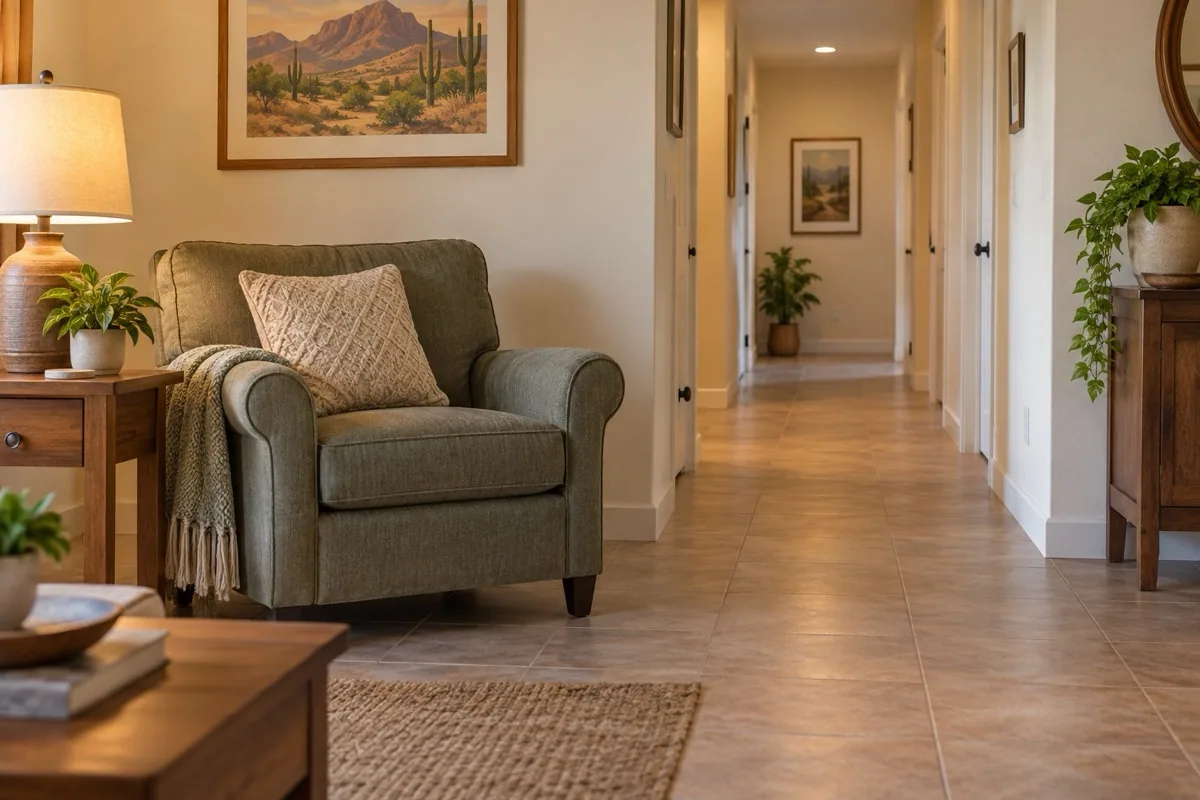
To make an older adult's home safer, start with clear walking paths, lighting they can reach, and support where floors get wet. Walk through the home together and agree on the first changes. A loose rug may need a simple fix; an uneven step or missing grab bar calls for a repair plan.
Start with the routes used every day
Look at the route from the bed to the bathroom and from a favorite chair to the kitchen. The CDC's home fall-prevention checklist recommends clearing floor clutter, moving furniture out of walking paths, and keeping cords beside the wall. Check loose rugs and stair carpet rather than assuming the whole floor needs replacing.
Ask the person who lives there what gets in the way. Choose a place for shoes, bags, and deliveries that leaves the route open, then agree on who will keep it clear.
Make light easy to reach
Check the home after dark as well as during the day. CDC recommends a lamp close to the bed, nightlights along a dark bathroom route, and working stair lights. If a new light or outlet is needed, put that on the repair list for an electrician.
Match bathroom and stair support to the task
CDC's fall-prevention guidance recommends grab bars beside the toilet and inside and outside the tub or shower, and railings on both sides of the stairs. Its room-by-room checklist adds nonslip mats or strips on slippery tub or shower floors and fixing loose or uneven steps. Discuss the person's needs before arranging installation.
Turn the walk-through into a small plan
Keep a short list so family members can divide the work and follow up.
- Everyday walkways: Record the obstruction to move and who will keep the path clear.
- Lighting: Record the place that is hard to see and who will check the light.
- Bathroom and stairs: Record the support or repair to discuss and who will arrange it.
- Daily help: Record the task that needs assistance and when that help is needed.
Home changes are one part of fall prevention. CDC also recommends asking a doctor to evaluate fall risk and a doctor or pharmacist to review medicines that may cause dizziness or drowsiness. Bring those questions to the licensed health care team.
Plan help around the daily routine
For families arranging home care in Scottsdale, describe the task and time of day that have become difficult. That makes a conversation about personal care or companion care more useful. Heritage provides non-medical support; the health care team directs clinical care. Our guide to keeping seniors independent at home covers how to add help while the person keeps their everyday choices.
To talk through practical support at home, call Heritage at (480) 418-4100.
Questions about home safety
What should we change first to make an older adult's home safer?
Start with the paths used every day. Pick up loose items, move cords out of the walkway, check lighting, and look for rugs that slide or curl. Use a room-by-room checklist to decide what needs a repair.
Do we need to replace all the flooring?
Start by identifying the actual hazard. A loose rug, torn stair carpet, uneven step, and slippery shower floor need different fixes. CDC's checklist recommends securing stair carpet, repairing uneven steps, and using nonslip shower surfaces.
Can home care replace a medical fall-risk evaluation?
A clinician evaluates fall risk and reviews medicines, vision, and other health factors. Non-medical home care can help with daily routines and agreed personal support. Ask your health care team about the clinical evaluation.
Sources
Heritage Home Care's editorial team writes practical guides for families arranging non-medical support at home in Scottsdale and across Maricopa County.