
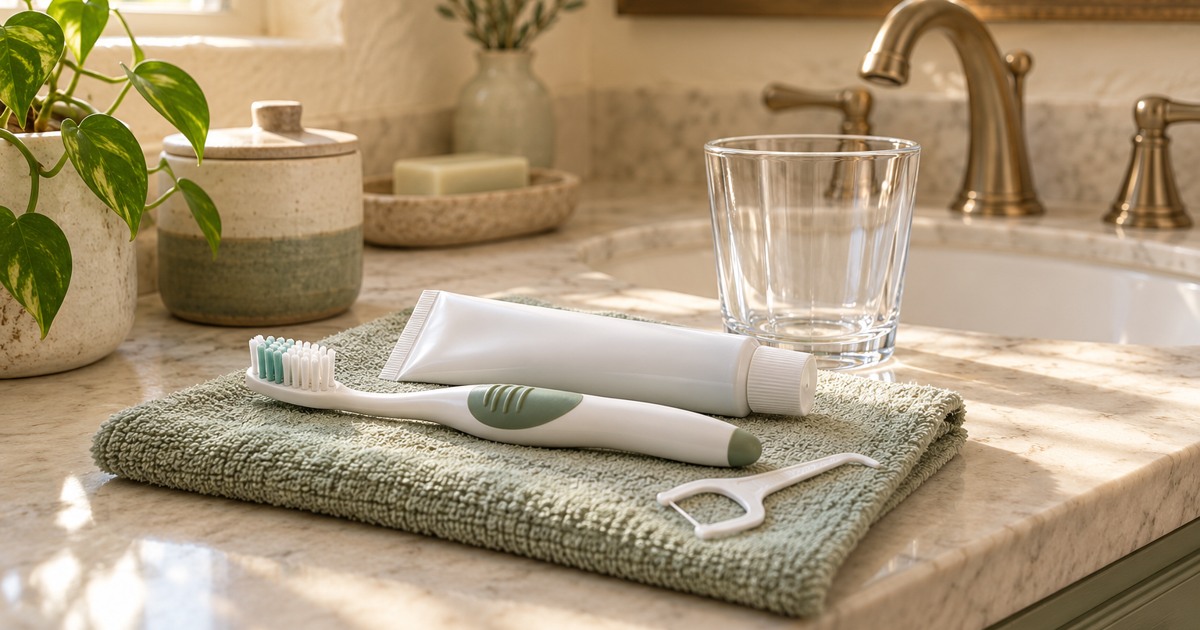
Encourage healthy dental habits by making the routine easier to start and easier to carry out. Put the supplies within reach, agree on a familiar time, and ask the dentist or hygienist to show any help the person needs. Keep the older adult involved in deciding how much support feels comfortable.
Start with the task that is getting missed
A missed routine calls for a specific conversation. Is it hard to remember to begin? Is the toothpaste cap difficult to open? Is holding the brush uncomfortable? Ask the person what gets in the way before deciding they need someone to take over.
The National Institute of Dental and Craniofacial Research (NIDCR) recommends brushing twice a day with fluoride toothpaste and cleaning between teeth regularly, aiming for once a day. Use that as the starting point for a conversation with the dental team about a workable home routine.
Match the help to the obstacle
Remembering to begin
Keep supplies visible and offer a familiar reminder. Let the person do the parts they can.
Holding or using tools
Ask the dental team to demonstrate an easier grip or another suitable brush or flossing tool.
Discomfort or persistent dryness
Bring the concern to a dentist or doctor. Ask for an individual plan before changing products.
Family planning guide. Sources: NIDCR oral hygiene, caregiver brushing and dry-mouth guidance. Checked October 22, 2026.
Make the setup familiar and easy to reach
Choose a place for the person's own toothbrush and toothpaste. Check together that they can reach the items and open the packaging. Agree who will replace worn supplies, so this does not become a task everyone assumes someone else is handling.
NIDCR's brushing guide for caregivers suggests reminders such as leaving supplies on the sink, handing the person a prepared toothbrush, or brushing your own teeth at the same time. Its guidance also supports using the same time and place each day. Try the cue the person prefers, then see whether it helps.
Keep a shared household note short: preferred time, where supplies are kept, the help requested and whom to contact with questions. Record a task such as "set out the brush after breakfast," rather than a judgment about whether someone has been cooperative. Keep personal care notes private.
Ask for a demonstration when tools are difficult
A larger toothbrush handle or a power toothbrush may make the task easier. The NIDCR caregiver guide illustrates adapted grips; its oral-hygiene page also lists floss holders and interdental brushes. Ask the dentist or hygienist which option suits the person and have them demonstrate its use.
If direct assistance is needed, explain exactly which part is difficult at the appointment. Ask how to help comfortably and what to do if the person cannot follow the suggested routine. Get instructions that everyone providing help can understand. Have the dental professional adapt the technique to the person's mouth, abilities and dental work.
For a person living with memory changes, keep the invitation calm and familiar. Offer a choice about when to begin. If a routine repeatedly becomes difficult, bring that pattern to the dental team rather than adding more reminders. Our Alzheimer's and dementia care page explains Heritage's broader daily support.
Keep dentures and dry mouth in the dental plan
Dentures need their own instructions. The NIDCR caregiver guide advises removing dentures at night and brushing them, and says to ask the dentist whether cleaning tablets should be used. Ask the dental team to write down the cleaning and storage routine for the particular dentures before sharing it with helpers.
NIDCR's dry-mouth guidance says persistent dry mouth can make chewing and swallowing difficult and increase tooth-decay risk. It is not a normal part of aging. Some medicines can reduce saliva, so tell the dentist or doctor about ongoing dryness and bring a current medicine list. Ask the prescriber to review medicine concerns.
Before a dental visit, write down what has changed and what the person finds difficult. Bring the oral-care products currently used and ask which should stay in the routine. Have the office explain follow-up timing and whom to call if the plan is uncomfortable or hard to carry out.
Arrange practical help in Scottsdale and Maricopa County
When the obstacle is getting to an appointment, ask about transport before postponing dental care. Maricopa County's Healthy Aging page directs older adults and caregivers to the Area Agency on Aging, Region One Senior HELP LINE at 602-264-4357 for information and referrals, including transportation. Ask what is available for the person's address and mobility needs.
Heritage's personal care and companion care pages describe help with daily routines. When arranging care, name the task: setting out supplies, offering reminders, or helping organize the day around an appointment. Ask which tasks can be included and share the dental team's instructions. Dental assessment and treatment belong with the dental professional.
Family questions
Questions about dental routines at home
How often should an older adult brush and clean between teeth?
NIDCR advises brushing twice a day with fluoride toothpaste and cleaning between teeth regularly, aiming for once a day. Ask the dental team to adapt the routine and tools to the person.
What if holding a toothbrush or floss is difficult?
Ask the dentist or hygienist to demonstrate a larger grip, a power toothbrush or another suitable tool. NIDCR lists floss holders and interdental brushes among options for cleaning between teeth.
Does dry mouth just come with getting older?
NIDCR says dry mouth is not a normal part of aging. Persistent dryness needs a dentist or doctor to assess the cause; some medicines can contribute. Ask the prescriber about medicine concerns.
Can Heritage help with dental habits at home?
Ask Heritage which personal-care tasks, reminders and routine support can be included in the care plan. Describe the help needed and any dental instructions. A dentist or hygienist should guide oral-care technique and products.
For help making the daily routine manageable, talk with Heritage Home Care about the support your family needs. Keep the dentist's instructions and the older adult's preferences at the center of that conversation.
Sources and further reading
Sources checked October 22, 2026.
- NIDCR: Oral Hygiene, daily routines and tools.
- NIDCR: Brushing, Information for Caregivers, reminders, adapted grips and dentures.
- NIDCR: Dry Mouth, persistent dryness and medicine concerns.
- Maricopa County: Healthy Aging, local resource referrals.
Frequently asked questions
How often should an older adult brush and clean between teeth?
NIDCR advises brushing twice a day with fluoride toothpaste and cleaning between teeth regularly, aiming for once a day. Ask the dental team to adapt the routine and tools to the person.
What if holding a toothbrush or floss is difficult?
Ask the dentist or hygienist to demonstrate a larger grip, a power toothbrush or another suitable tool. NIDCR lists floss holders and interdental brushes among options for cleaning between teeth.
Does dry mouth just come with getting older?
NIDCR says dry mouth is not a normal part of aging. Persistent dryness needs a dentist or doctor to assess the cause; some medicines can contribute. Ask the prescriber about medicine concerns.
Can Heritage help with dental habits at home?
Ask Heritage which personal-care tasks, reminders and routine support can be included in the care plan. Describe the help needed and any dental instructions. A dentist or hygienist should guide oral-care technique and products.